
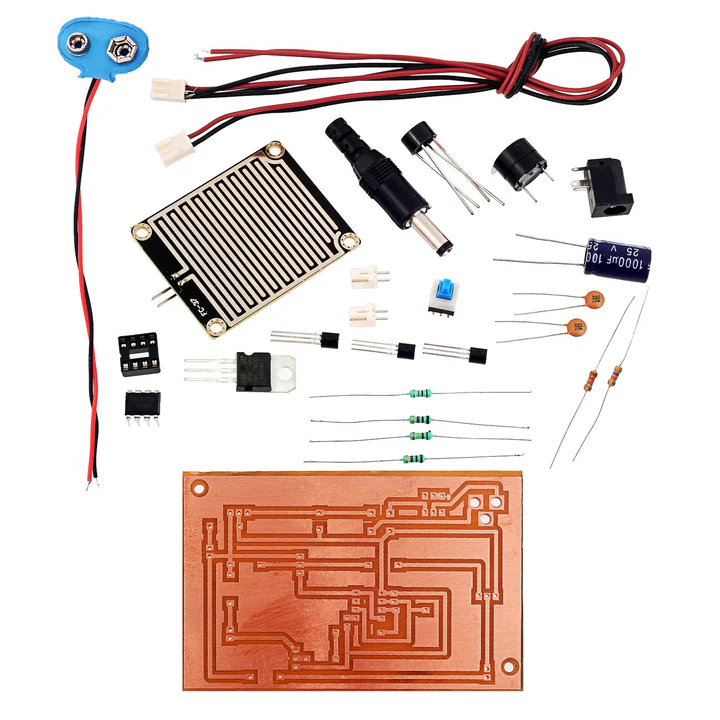

There’s something strangely poetic about the way technology quietly adapts to the rhythm of nature. Think about it: the soft whirr of your car’s wipers suddenly kicking in just as a drizzle begins, or the gentle click of a sensor that keeps a machine from overheating. We barely notice these small interventions, yet they’re the unsung heroes that make modern living seamless. Lately, I’ve been fascinated by these little devices—the overlooked components tucked inside our gadgets, humming along without fanfare.
One of the best examples? A rain detector. It’s not the kind of gadget you’ll boast about at a dinner party, but if you’ve ever had one in your car or irrigation system, you know how much it changes the game. Instead of fumbling to switch on wipers or stressing over whether your garden is getting enough water, the sensor makes that call for you. It doesn’t need an audience; it just quietly ensures that everyday life runs smoother, even when the skies get unpredictable.
Everyday Magic in Motion
What strikes me most about these technologies is how invisible they are. You don’t see the circuitry or think about the engineering. You just experience the result. There’s a small, almost magical quality to it—the way your car anticipates the rain, the way your lawn doesn’t drown after a sudden storm.
At the core, of course, it’s not magic at all. It’s science. These devices rely on conductivity changes when water droplets land on a surface, or sometimes on optical sensors that detect raindrops interrupting a beam of light. Pretty straightforward in principle. But applied correctly, they save time, conserve resources, and in some cases, even protect equipment worth thousands of dollars.
And here’s the thing: the simpler the design, the more reliable it tends to be. These aren’t big, flashy inventions; they’re workhorses. People often chase after the dramatic breakthroughs—flying cars, AI supercomputers, next-gen rockets—but sometimes it’s the tiniest piece of hardware, working silently, that makes the most difference in daily routines.
The Humble Click That Powers Modern Devices
Speaking of small but mighty, let’s talk about another underdog in the world of sensors—the reed switch sensor. Just hearing the name, you probably wouldn’t expect much. It sounds old-school, almost outdated, like something pulled from a dusty physics textbook. But the reality? Reed switches are everywhere.
At their heart, they’re just two ferromagnetic blades sealed inside a small glass tube. Bring a magnet close, and the blades snap together to complete a circuit. Move the magnet away, and they spring apart. That’s it. Simple mechanics. Yet, from laptops to security systems, these tiny switches keep things running smoothly. Ever wonder how your fridge light knows when to turn on as you open the door? Chances are, it’s thanks to a reed switch.
This is the kind of elegance I love in engineering. There’s no overcomplication, no unnecessary flash. Just a mechanism that does exactly what it’s supposed to, over and over again, with near-zero failure. In a world chasing complexity, there’s something refreshing about technology that thrives on simplicity.
Where Small Sensors Create Big Impact
I think what makes these devices so special is how they multiply their value across so many industries. Take rain sensors again: in agriculture, they help optimize irrigation, saving not just water but also energy. For farmers juggling weather unpredictability, that’s invaluable. On the other end of the spectrum, in luxury vehicles, rain detectors enhance safety and convenience—your wipers adjust speed automatically, keeping your hands free and your attention on the road.
Meanwhile, reed switches quietly protect machinery in manufacturing floors, detect door openings in security systems, and even support medical equipment where precision and reliability can’t be compromised. You don’t hear about these things on the news, but they’re the backbone of the everyday tech we depend on.
There’s also a sustainability angle here. Think about the wasted electricity or water when humans forget to turn something off or on. A tiny, low-cost sensor that automates that task reduces waste dramatically over time. Multiply that across millions of households or industrial systems, and the impact is massive.
Why We Rarely Appreciate Them
Maybe it’s human nature. We tend to celebrate big, visible milestones and overlook the quiet helpers. The smartphone gets the spotlight, not the sensors that make its touchscreen accurate. The car gets the praise, not the mechanism that ensures your safety in rain or snow.
But once you pause and notice these small marvels, it’s hard not to develop respect for them. They represent the unsung philosophy of engineering: solve the problem, stay out of the way, and do it reliably. No applause required.
I also think there’s a lesson tucked inside this for how we live our lives. Not everything impactful has to be loud, complicated, or dramatic. Sometimes the small, steady, reliable contributions—whether from people, habits, or technologies—make the biggest long-term difference.
A Future Still Built on the Simple
As we look ahead, with AI, robotics, and automation reshaping industries, I suspect sensors like these will only grow more critical. The more connected our devices become, the more they’ll rely on real-world inputs—like rain, motion, magnetism, or light—to make decisions on our behalf. And while the software might get all the headlines, it’s these tiny bits of hardware that make the digital-physical handshake possible.
Think of it this way: no matter how advanced a system is, it still needs a way to sense what’s happening in the world around it. Without that, the smartest AI is just guessing in the dark. That’s why I believe the future isn’t just about bigger brains in our machines but sharper senses.
Closing Thoughts
The next time your car’s wipers flick on without you lifting a finger, or you hear the faint click of a sensor activating in some piece of equipment, take a second to notice it. There’s beauty in that quiet reliability. These aren’t glamorous technologies, but they’re honest ones. They work hard in the background so we can focus on everything else.
A rain detector doesn’t brag. A reed switch sensor doesn’t trend on social media. But together, they remind us that the future isn’t just about grand inventions—it’s also about perfecting the simple, making the ordinary extraordinary, and designing tools that serve without demanding attention. And maybe, just maybe, that’s the kind of technology we should celebrate a little more often.